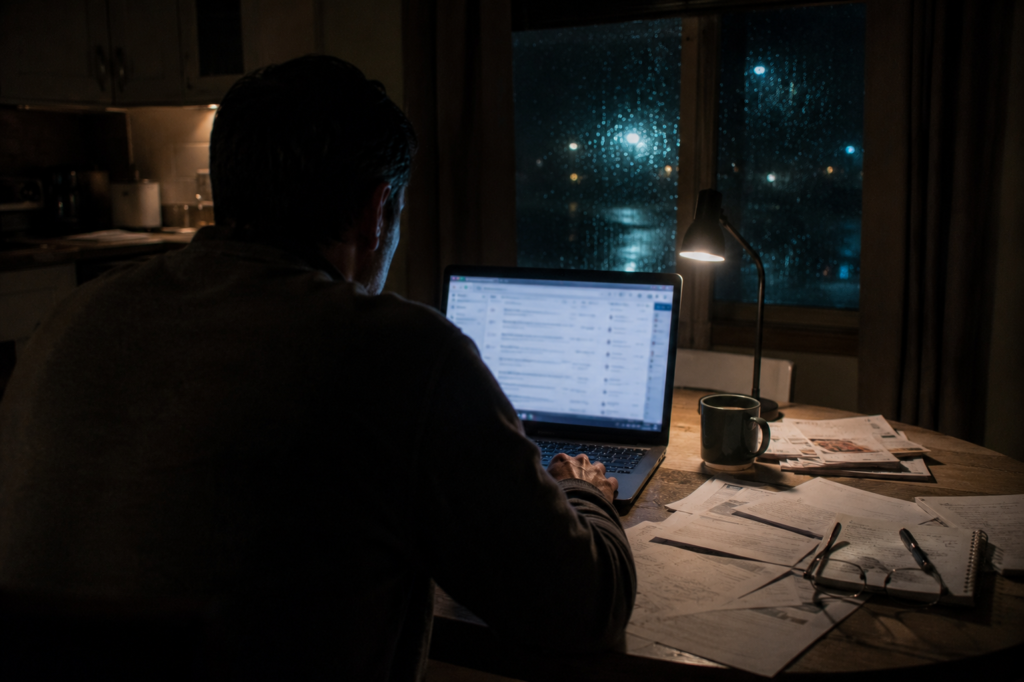
Editorial: This article reflects my personal experiences and opinions while looking for work. Your experience may be different, and I’d genuinely like to hear it.
A few months ago, I realized something.
I was spending almost as much time looking for work as I used to spend actually working.
Every morning started to look the same.
Coffee.
LinkedIn.
Indeed.
Company websites.
Refresh.
Search again.
Tailor another resume.
Fill out another application.
Answer questions I’d already answered on my resume.
Click “Submit.”
Then wait.
Most of the time…
Nothing happened.
No email.
No phone call.
No rejection.
Just silence.
After enough days like that, I started wondering something.
Are these platforms actually helping me find a job, or are they just giving me something to do while I’m unemployed?
I don’t know the answer.
I only know what it has felt like from where I’m sitting.
I’m Not Saying LinkedIn Doesn’t Work
Before I go any further, I want to be fair.
People absolutely get hired through LinkedIn.
People make professional connections.
Recruiters reach out.
Jobs are filled every day.
I’m not arguing that LinkedIn is useless.
What I’m saying is that my experience—and the experience I’ve seen many other workers describe—has often felt very different.
I’ve submitted application after application.
I’ve rewritten my resume more times than I can count.
I’ve tried different formats.
Different keywords.
Different approaches.
Sometimes I wonder if any of it made a difference.
Because when you never hear anything back, it’s hard to know what to change.
The Silence Is the Hardest Part
I can deal with rejection.
I don’t enjoy it, but at least rejection tells me somebody looked.
Silence is different.
Silence leaves me wondering whether anyone ever saw my application in the first place.
Did it get filtered out?
Did a hiring manager ever read it?
Was the position already filled?
Was it put on hold?
Was I missing a keyword?
I have no idea.
When I do get a rejection email, it isn’t always reassuring.
I’ve received rejection emails that looked like someone forgot to finish editing the template. The job title was missing entirely, leaving what felt like a form letter that could have been sent to anyone. Maybe it was an honest mistake. But when you’re already questioning yourself, little things like that make the process feel even more impersonal.
If I had turned in work that incomplete in many of the jobs I’ve held over the years, it would have been a problem. That’s part of what makes experiences like that so frustrating.
That’s what makes online job searching feel so strange.
You’re trying to improve your approach without ever finding out what went wrong.
LinkedIn Can Be Rough When You’re Unemployed
There’s another part of LinkedIn that I wasn’t expecting.
Every time I log in, somebody is celebrating something.
A promotion.
A new position.
A work anniversary.
A new certification.
I’m genuinely happy for those people.
At the same time, I’d be lying if I said it never affected me.
When you’re unemployed, it’s easy to look at those posts and wonder when it’ll finally be your turn.
I’ve also noticed something else.
A lot of people seem afraid to be themselves online.
Everything is polished.
Everything is positive.
Everything sounds like a press release.
Maybe that’s because LinkedIn has become more than a networking site. For many people, it’s part of the hiring process. I’ve seen employers ask applicants to include a link to their LinkedIn profile on job applications, and I can understand why that might make someone think twice before posting an honest opinion.
I don’t blame workers for being careful.
If you believe a post could cost you a job opportunity—or even your current job—you start editing yourself before you ever hit “Publish.”
The problem is that it becomes harder to have honest conversations about work when everyone feels like they’re being evaluated all the time.
Some Things Don’t Make Sense
There are other things I’ve seen that I still struggle to understand.
I’ve watched companies announce layoffs and eliminate positions.
Then, not long afterward, I’ve seen job postings from those same companies that appear to be for similar roles.
I’m sure there are explanations in some cases. Maybe the responsibilities changed. Maybe the position is in a different location. Maybe the original posting was never removed.
But from the outside, as someone looking for work, it can be confusing.
When you’re unemployed, you don’t have access to what’s happening inside the company.
You just see another posting and wonder what you’re missing.
That uncertainty becomes part of the job search too.
Easy to Apply Doesn’t Mean Easy to Get Hired
Something else has been bothering me.
We’ve made applying for jobs easier than ever.
Sometimes it’s one click.
That sounds like progress.
But I also wonder whether it created a different problem.
If thousands of people can apply in a few minutes, employers end up sorting through mountains of applications.
Workers send out more applications because they know the odds are lower.
Companies receive even more applications.
Everybody seems to spend more time, and everyone seems more frustrated.
I’m not saying that’s the only reason hiring feels broken.
It’s just something I’ve found myself thinking about while applying for jobs.
I Still Use It
Here’s the part that probably sounds contradictory.
I still use LinkedIn.
I still apply online.
Honestly, I don’t have much choice.
That’s where many employers expect applications now.
So tomorrow morning, I’ll probably open LinkedIn again.
I’ll probably search for jobs again.
I’ll probably submit another application.
Because giving up doesn’t improve my chances either.
What I’ve Had to Remind Myself
The hardest part of unemployment isn’t always the lack of income.
Sometimes it’s what prolonged silence starts doing to your confidence.
I’ve caught myself asking questions like:
Am I too old?
Has my experience stopped mattering?
Am I doing something wrong?
The truth is, I don’t always know.
And that’s exactly why I try not to let unanswered applications define my value.
A company deciding not to call me doesn’t erase decades of work.
It doesn’t erase the skills I’ve learned.
It doesn’t erase the problems I’ve solved.
It doesn’t erase who I am.
Some days that’s easier to believe than others.
Final Thoughts
I’m going to keep using LinkedIn.
I’m going to keep applying.
Not because I think the process is perfect.
Because it’s the system we have.
I just wish it felt more human.
I wish applicants got more feedback.
I wish companies and workers weren’t separated by so much software and silence.
Maybe technology has made hiring more efficient.
I’m honestly not sure it’s made it feel any more personal.
And maybe that’s what I’ve been struggling with the most.
What Do You Think?
Everything in this article reflects my own experiences and opinions. They aren’t universal, and they aren’t meant to speak for everyone.
I’d genuinely like to hear your experience.
How many jobs have you applied for online?
Has LinkedIn helped you find work, or has it mostly left you feeling frustrated?
Have you ever received a rejection that felt like nobody even reviewed your application?
Share your story in the comments. I read every one.
About The Exploited Worker 138
The Exploited Worker 138 is an independent publication exploring work, layoffs, unemployment, artificial intelligence, the economy, and what it means to rebuild in a changing world. Through personal stories, research, and honest discussion, my goal is to create a place where workers can talk honestly about experiences that often go unheard.